Integrating Automation Tools with Shopify

Are you ready to elevate your Shopify store's efficiency? By embracing automation tools, you can transform tedious tasks into streamlined processes that save time and enhance productivity. Discover how these tools can revolutionize your business!
What You Will Learn
- Automation tools minimize manual effort, enabling better focus on strategic growth initiatives.
- Popular tools like Shopify Flow, Webgility, and Zapier can help streamline operations and improve accuracy.
- Understanding your ROI from automation is essential for measuring its impact on business performance.
- Effective customer relationship management (CRM) can be enhanced through automation, leading to happier, repeat customers.
Shopify Automation Tool Benefits & Impact
This visual summarizes key benefits and real-world impacts of integrating automation tools within Shopify stores, highlighting improvements in efficiency, sales, and customer experience.
Benefits of Automation Integration
- ✓ Reduce operational costs
- ✓ Enhance order accuracy
- ✓ Improve customer response times
- ✓ Focus on strategic growth
Key Performance Indicators (KPIs) for ROI
- ● Reduction in time spent on repetitive tasks
- ● Increase in sales and revenue growth
- ● Improvement in customer satisfaction & retention
Real-World Impact Statistics
- ▶ 30% reduction in order processing time (via Shopify Flow)
- ▶ 50% increase in sales (via Zapier connecting social media)
- ▶ Lower overhead costs (via automated inventory management)
CRM Benefits with Automation
- ★ Personalize communication
- ★ Improve response times
- ★ Gather valuable marketing insights
Understanding Automation Tools for Shopify Integration
In today's fast-paced digital marketplace, automation tools have become essential for anyone operating on platforms like Shopify. These tools help streamline various business processes, enabling entrepreneurs to focus on growth and innovation. Whether you’re managing inventory, processing orders, or enhancing customer engagement, automation can save you valuable time and resources!
At iBiz Magazine, we’re passionate about empowering entrepreneurs to leverage the right technology for their businesses. As I’ve seen firsthand, integrating automation tools can significantly boost efficiency and reduce manual errors, which ultimately translates into improved customer satisfaction.
What Are Automation Tools and Their Importance for Shopify?
Automation tools are software applications designed to perform repetitive tasks with minimal human intervention. For Shopify store owners, these tools can automate everything from inventory management to order fulfillment. By implementing automation, you can effectively:
- Reduce operational costs
- Enhance order accuracy
- Improve customer response times
- Focus on strategic growth initiatives
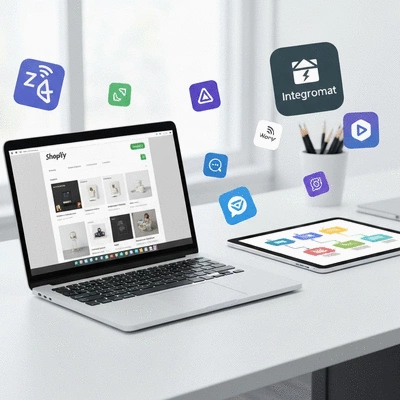
Understanding the importance of these tools is critical for anyone looking to thrive in the competitive eCommerce landscape. With the right automation in place, your business can operate more smoothly, allowing you to dedicate more time to driving sales and expanding your brand. For further insights into how various tools contribute to business automation, consider exploring resources on business automation strategies from Shopify.
Overview of Popular Automation Tools in the Shopify Ecosystem
The Shopify ecosystem is rich with automation tools tailored to various business needs. Here are some of the most popular tools that can help you optimize your store:
- Shopify Flow: A powerful tool that streamlines operations through automated workflows.
- Webgility: Essential for managing inventory across multiple channels seamlessly.
- Celigo: Ideal for optimizing ERP integrations with Shopify to enhance data flow.
- Zapier: Connects your favorite apps, allowing for enhanced workflows.
- Integromat (Make): Automates complex workflows effortlessly.
These tools not only help you save time but also allow for better data management and operational transparency. It’s crucial to choose the right ones that align with your specific business needs. The effectiveness of such tools in streamlining operations and enhancing efficiency is a well-documented aspect of modern e-commerce, as detailed in various academic studies on the topic, such as those found on scientific research repositories.
Shopify Flow: Streamlining Operations
Shopify Flow is a robust automation tool designed to simplify various operational tasks. With this tool, you can set up custom workflows that trigger actions based on specific events such as order placements or customer behaviors. For instance, you can automate tasks like labeling orders or notifying your team about low stock levels, ensuring that your operations run smoothly without constant oversight. Learn more about how businesses leverage workflow automation to scale efficiently.
By implementing Shopify Flow, entrepreneurs can save countless hours, allowing them to focus on strategic decisions and customer engagement rather than getting bogged down in daily tasks.
Webgility and Its Role in Inventory Management
Webgility excels in inventory management by automating the syncing of stock levels across various sales channels. This ensures that you never run out of stock or oversell products, which can tarnish your brand's reputation. By integrating Webgility with your Shopify store, you can manage orders efficiently and keep your inventory data accurate!
This tool is particularly beneficial for those running multi-channel operations, as it centralizes your inventory management, making it easier to maintain control and visibility over your stock levels.
Celigo: Optimizing ERP Integrations
Celigo is another invaluable tool that focuses on integrating your ERP systems with Shopify. It optimizes data flow between your sales channels and backend operations, making sure that your financial and inventory data remain aligned. This integration is vital for maintaining accurate records and streamlining business operations.
By using Celigo, you can eliminate manual data entry, reduce errors, and enhance reporting capabilities, giving you more insights into your business performance.
Zapier: Connecting Your Favorite Apps for Enhanced Workflow
Zapier is a versatile automation tool that allows you to connect over 2,000 applications, making it easier to create workflows that suit your business needs. For Shopify store owners, this means you can automate actions such as adding new customers to your email marketing list or updating your inventory in real-time.
This level of connectivity enhances your ability to manage operations efficiently and ensures that all your applications work in harmony!
Integromat (Make): Automating Complex Workflows with Ease
If your business involves complex workflows, Integromat (now known as Make) is the tool for you! It allows for advanced automations that can handle intricate tasks across multiple apps. For example, you can create a workflow that triggers when a customer makes a purchase, updates your inventory, and sends a follow-up email—all automatically.
This tool is perfect for businesses looking to scale and enhance their automation capabilities without compromising quality.
Pro Tip
When integrating automation tools into your Shopify store, consider starting with a pilot project. Choose one specific area, such as inventory management or customer engagement, to implement automation first. This approach allows you to measure the effectiveness and make adjustments before scaling to other areas of your business. Remember, gradual implementation can lead to more sustainable results!
Evaluating the Benefits of Automation Integration for Your Shopify Store
When it comes to running a successful Shopify store, understanding the benefits of automation integration is essential. Automation tools can streamline various processes, reduce manual workload, and ultimately lead to enhanced profitability. But how do we measure the impact of these tools? Let's dive into the specifics!
Measuring ROI from Automation Tools
Calculating the return on investment (ROI) from automation is vital for assessing its effectiveness in your business model. Start by identifying key performance indicators (KPIs) that matter to your store, such as:
- Reduction in time spent on repetitive tasks
- Increase in sales and revenue growth
- Improvement in customer satisfaction and retention rates
Once you have established these KPIs, monitor them before and after implementing automation tools. This will provide a clear picture of how much value automation brings to your Shopify operations. Remember, even small time savings can add up, translating to significant cost savings over time!
Testimonials and Case Studies: Real-World Success Stories
There's no better way to understand the power of automation than by looking at real-world success stories. Many entrepreneurs have shared their experiences with tools like Shopify Flow and Zapier. For example:
- One eCommerce store reported a 30% reduction in order processing time after integrating Shopify Flow.
- A fashion retailer saw a 50% increase in sales by using Zapier to connect their social media campaigns with their online store.
- A food delivery service streamlined their operations by automating inventory management, resulting in lower overhead costs.

These testimonials highlight how automation has not only simplified day-to-day operations but also provided a competitive edge in the marketplace. It’s inspiring to see how others have transformed their businesses, and I encourage you to explore these stories for motivation!
Understanding Customer Relationship Management (CRM) Benefits
Automation tools can significantly enhance your customer relationship management (CRM) strategies. By automating customer interactions and data collection, you can:
- Personalize communication based on customer behavior and preferences
- Improve response times to customer inquiries
- Gather valuable insights to refine your marketing efforts
With integrated CRM solutions, you’ll be able to manage customer relationships more effectively, ensuring that every interaction counts. Plus, happy customers lead to repeat business—a win-win situation for your Shopify store!
Frequently Asked Questions (FAQs) about Shopify Automation
Q: What are the primary benefits of using automation tools for my Shopify store?
A: Automation tools help reduce operational costs, enhance order accuracy, improve customer response times, and allow you to focus on strategic growth initiatives by minimizing manual effort.
Q: Which popular automation tools are recommended for Shopify?
A: Some of the most popular tools include Shopify Flow for workflow automation, Webgility for inventory management, Celigo for ERP integrations, Zapier for connecting various apps, and Integromat (Make) for complex workflow automation.
Q: How can I measure the return on investment (ROI) from automation in my Shopify store?
A: You can measure ROI by tracking key performance indicators (KPIs) such as the reduction in time spent on repetitive tasks, increased sales and revenue growth, and improvements in customer satisfaction and retention rates before and after implementing automation.
Q: Can automation tools help with customer relationship management (CRM)?
A: Yes, automation tools can significantly enhance CRM by personalizing communication based on customer behavior, improving response times to inquiries, and gathering valuable insights to refine your marketing efforts.
Q: Where can I find more resources and support for Shopify automation?
A: You can find additional resources in the Shopify Help Center, online forums and communities like Reddit and Shopify Community, and industry blogs such as iBiz Magazine. The Shopify App Store also offers a wide range of automation apps.
Next Steps for Seamless Operations with Shopify
Now that we've explored the benefits of automation integration, it's time to take actionable steps toward enhancing your Shopify operations. Ready to make the leap? Let's look at some resources and options available to you!
Where to Find Additional Resources and Support
There’s a wealth of resources to help you navigate the world of automation for your Shopify store. Here are some places you can explore:
- The Shopify Help Center provides extensive articles and guides on integrating automation tools.
- Online forums and communities like Reddit and Shopify Community are great for real-time support and shared experiences.
- Consider following industry blogs, including iBiz Magazine, where I share insights and strategies regularly.
These resources can empower you with knowledge and best practices to ensure your automation journey is successful!
Call to Action: Book a Demo or Explore Free Trials
Feeling inspired? Take the next step by booking a demo with your chosen automation tool or exploring free trials. This hands-on experience will help you better understand how these tools can fit into your existing Shopify setup. Don't hesitate to reach out to tool providers and ask for personalized demonstrations!
Exploring Automation Apps in the Shopify App Store
The Shopify App Store is filled with various automation apps designed to enhance your business operations. Here are some popular categories to consider:
- Inventory Management Apps to keep track of stock levels effortlessly.
- CRM Tools for managing customer interactions effectively.
- Order Management Solutions to streamline the fulfillment process.
Take your time to explore the app store and find the tools that resonate with your business needs. Remember, the right automation tools can make all the difference in your Shopify success story!
Recap of Key Points
Here is a quick recap of the important points discussed in the article:
- Automation tools are essential for streamlining business processes on Shopify, helping to save time and resources.
- Key automation tools include Shopify Flow, Webgility, Celigo, Zapier, and Integromat (Make), each serving different operational needs.
- Measuring the ROI from automation tools is crucial; key performance indicators like time reduction and sales growth should be monitored.
- Real-world success stories demonstrate the significant impact of automation on order processing times and sales increases.
- Automation enhances customer relationship management by personalizing interactions and improving response times.